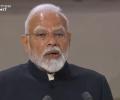
Prime Minister Narendra Modi advocated for a global framework for artificial intelligence (AI) based on open source, emphasizing the need for trust, transparency, and the elimination of biases. Co-chairing the AI Action Summit with French President Emmanuel Macron, Modi highlighted the transformative potential of AI across various domains, including politics, economics, security, and society. He stressed the importance of democratizing technology, addressing concerns about cyber security and disinformation, and developing quality data sets free from biases. Modi also acknowledged the need for open-source AI ecosystems to foster trust and transparency, while emphasizing the importance of localized technology for effectiveness and usefulness. Recognizing the potential of AI to improve health, education, and agriculture, Modi proposed pooling resources and talent to leverage the technology for sustainable development goals. Addressing concerns about job displacement, he emphasized that while the nature of work may evolve, technology creates new opportunities. Modi highlighted India's leadership in AI adoption and data privacy solutions, emphasizing the nation's readiness to share its expertise and contribute to an AI future that benefits all.
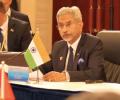
Jaishankar said the UN Security Council condemned the attack and underlined the need to hold perpetrators, organisers, financiers and sponsors of the reprehensible act and bring them to justice.
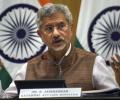
The last Indian external affairs minister to visit Pakistan was Sushma Swaraj. She had travelled to Islamabad in December 2015 to attend a conference on Afghanistan.

Russian President Vladimir Putin announced his upcoming visit to India in December and expressed his intention to address the trade imbalance between the two countries, particularly concerning India's crude oil imports from Russia. He also lauded India's independent stance on international issues and highlighted the strong relationship between the two nations.
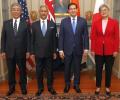
The Quad grouping has called for bringing the perpetrators, organisers and financiers of the Pahalgam terror attack to justice without any delay and urged UN member nations to extend cooperation for it.
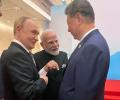
'One Chinese interlocutor said India should realise that "China can do without India, but India could not do without China", pointing to its inability to do without Chinese intermediates and components,' former foreign secretary Shyam Saran discovers on a visit to China.

'...it should not delude itself into thinking that India's security or its great-power ambitions will be advanced by those partnerships.'
'Instead, what India should focus on is on riding out the next three-and-a-half years of Trump's presidency with minimal damage to itself.'
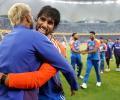
The tournament had been fraught with tension from the very start, and the animosity carried into the final, which India won by five wickets on a rather long Sunday night.

The BRICS nations condemned the Pahalgam terror attack, advocated for a zero-tolerance approach to terrorism, and criticized rising tariffs during their summit in Rio de Janeiro. They also addressed global challenges and called for reforms in international institutions.

Prime Minister Narendra Modi on Monday presented India's strong stance against terrorism, calling out the 'some countries' for their open support of terrorism and reaffirming that such 'double standards' are not acceptable.
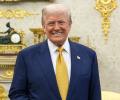
Trump, who has repeatedly said that he stopped the conflict between India and Pakistan through trade, last Friday said for the first time that "five jets were shot down" during the fighting.

India-US relations, like Rome, were not built in a day, nor can they be demolished in a day.
All said and done, when the new global order emerges, India can only remain with the democracies, asserts Ambassador T P Sreenivasan.
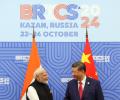
'Don't play the American game... India is too big for a US game.'
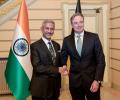
The era where nations thrived through rigid alignments is giving way to an age where the connective State defines power. For India, that era has arrived, points out Dr Nishakant Ojha.
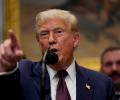
India would neither succumb to the Americans on issues of national security, such as its defence ties with Russia, nor cede ground on its domestic interests in the agriculture and dairy sectors.
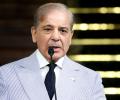
Leaders of Pakistan, Turkey and Azerbaijan agreed to strengthen their ties for the mutual benefit of their peoples, as well as for regional peace and prosperity. The understanding was reached at the Pakistan-Turkey-Azerbaijan trilateral summit in Lachin, Azerbaijan, attended by Prime Minister Shehbaz Sharif alongside presidents Recep Tayyip Erdogan and Ilham Aliyev. Azerbaijan announced a USD 2 billion investment in Pakistan's economy. Turkey expressed support for the ceasefire between Pakistan and India and hopes that it evolves into permanent peace.
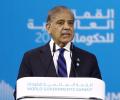
Sharif said that the US president had shown beyond any doubt that "he is a man for peace... and beneficial business deals".

Lula da Silva congratulated Modi and thanked India for its efforts to give voice to the topics of interest to emerging economies.
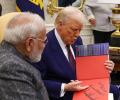
'The current strain in the relationship is serious and likely to be long lasting.' 'Even if Trump suddenly changes his attitude toward India -- which he is entirely capable of doing -- it is unlikely that New Delhi will be able to pick up the pieces and respond as if nothing has happened.'
'We should watch -- in the near term -- for signs that the two have totally fallen out at a personal, political level.' 'Trump and Modi know how to be dealmakers, but they also know how to hold a grudge.'
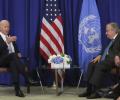
By proposing the addition of six permanent members this year, it may appear that it was a major concession, but in actual fact, it will make no difference to the privilege of the permanent five as the new six will have no veto, ever! points out Ambassador T P Sreenivasan.

The stock and bond markets told Trump firmly that any idea of isolating China would lead to harming the US economy and this forced Trump to backtrack, points out Aakar Patel.
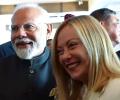
Prime Minister Narendra Modi held a series of bilateral meetings with his global counterparts on the margins of the G7 Summit in Kananaskis, with discussions focusing on a range of issues such as trade, investment, counter-terrorism and global challenges.

'While on the one hand, terrorism continues to be a serious threat to global peace and security, on the other hand, areas such as cyber, maritime and space, are emerging as new theatres of conflict'


Erdogan said all non-P5 members should have an opportunity to become members of the Security Council by rotation.
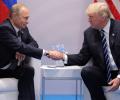
The US ended up abstaining from the vote for its own resolution at the General Assembly after several amendments were passed ahead of the vote to strengthen the language against Russia and reaffirm Ukraine's territorial integrity.
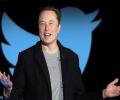
UN Secretary General Antonio Guterres had also made an impassioned plea for the UN to reflect today's world.

Ukrainian President Volodymyr Zelenskyy told the United Nations Security Council that 'we have to prepare' the second peace summit to end the Russia-Ukraine war 'altogether' and he has invited India and other countries to join the peace process.

China has signalled that it will prevent India from assuming leadership of the Global South, observes Ambassador T P Sreenivasan.
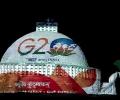
'The group commands 85 per cent of the global GDP, and if you are able to convey your point of view effectively to this group then you have reached more or less all the important players that matter.'
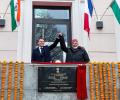
Prime Minister Narendra Modi and French President Emmanuel Macron have called for enhancing trade and investment ties between their countries and committed to further deepening their engagement in the Indo-Pacific. They discussed a full spectrum of bilateral relations, including key global and regional issues, and stressed the urgent need for reform in the United Nations Security Council. The leaders also underscored their commitment to ensuring the global AI sector can drive positive social, economic, and environmental outcomes.

PM Modi went to New York this time not to engage in polemics, but to find solutions to global problems. He made some progress on several matters, even on reform of the UN Security Council, when the US made a major concession for the first time that six permanent members without veto, including India, could be considered
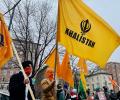
A city council in Sydney has cancelled a Khalistan propaganda event planned for next month due to security reasons, a media report said on Friday.

Saudi Arabian Crown Prince Mohammed bin Salman arrived in New Delhi on a three-day state visit during which he will hold a bilateral meeting and co-chair the first leaders' meeting of the Strategic Partnership Council with Prime Minister Narendra Modi.
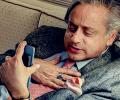
The political and ideological differences between the Congress and Shashi Tharoor is no longer a matter of whispers.

Prime Minister Narendra Modi said on Sunday said he views the current situation in Ukraine as an issue of humanity and human values and not of politics or economy even as he called for respecting international law, sovereignty and territorial integrity of all nations.

This is the first time that the National Security Council has held a meeting with these Sikh activists and Sikh separatists.

India's dream to be in the forefront of international politics has come true. India has placed itself firmly as a major player in the shaping of a new world order, observes Ambassador T P Sreenivasan.

Cameron also said Modi has a very clear plan about technology and the future of India and his third consecutive term in office demonstrates the ability to bring real change in a consistent way.
 © 2026 Rediff.com - Advertise with us - Disclaimer - Privacy Policy - Sitemap - Feedback - About us - Terms of use - Grievances